
01The short answer.
Brand is rarely the only reason sales flatten, but it can quietly cap growth. When people cannot see a meaningful difference, do not recognise the business across touchpoints or struggle to explain why it is the right choice, more activity simply pushes the same weak signal further.
The practical test is whether the work can make a choice clearer for the customer and the team at the same time. If the answer is yes, it is doing more than looking busy. It is giving the business a stronger way to compete.
Pay attention to the kind of demand arriving. If enquiries are mostly comparing on a narrow feature or asking for the same basic explanation, the brand may not be establishing enough relevance before the sales conversation begins. If referrals arrive with a clear understanding of why you are different, the brand is already making the sales task easier.
02Read the symptoms before changing the plan.
The usual response is to add leads, adjust the offer or ask sales to work harder. Those actions may be necessary, but they cannot solve a market that sees you as broadly similar to everyone else. Before changing tactics, check whether the brand is creating confidence or asking the customer to do too much interpretation.
Before production begins, we ask what would have to be true for this work to earn attention and trust. That turns a vague request for more activity into a decision about audience, context and the role the brand needs to play.
Three decisions worth making early
- Listen to sales language. Do sales conversations rely on generic claims, long explanations or discounting the value of the offer? That may indicate the positioning is not giving the team a memorable story to use.
- Audit the moments that matter. Compare the website, proposals, social channels, product materials and customer communications. If they look and sound unrelated, the business is losing trust through inconsistency.
- Look for category sameness. Collect competitor claims and visual cues. If every business promises quality, service and expertise in similar language, your audience has no simple reason to prefer one name over another.
A clear brand makes every message work harder.
03Find the friction in the customer journey.
Fix the sequence, not just the surface. Start with the audience, the commercial tension and the difference you can prove. Then turn that into a sharper story, a clear visual system and the practical sales and marketing tools that express it. A new logo without a changed decision will not remove the underlying friction.
This is where a useful making the brand work harder system earns its keep. It gives people a common starting point, so the creative energy goes into solving the current problem rather than reopening every basic decision. Consistency is not decorative discipline; it is a practical way to reduce friction.

04Fix the order of the problems.
Bring sales, service and marketing into the diagnosis early. They hear different evidence: objections, repeat questions, reasons for referral, proof customers trust and places where the message falls apart. The best brand work is commercial because it converts this evidence into choices people can actually use.
Make the review criteria visible. Ask whether the work is clear at the speed people will actually encounter it, whether the proof is believable, whether the action is proportionate, and whether the brand is recognisable without needing an explanation. Those questions are more useful than asking whether the room likes it.
Do not confuse a refreshed appearance with a changed position. Visual consistency, better content and stronger assets are valuable, but they work best when the underlying customer choice is clear. Decide what you want to be known for, what proof makes that believable and what category habit you are prepared not to copy. Then let the design make that decision visible.
Recognition is built through useful repetition.
05Give sales a sharper story.
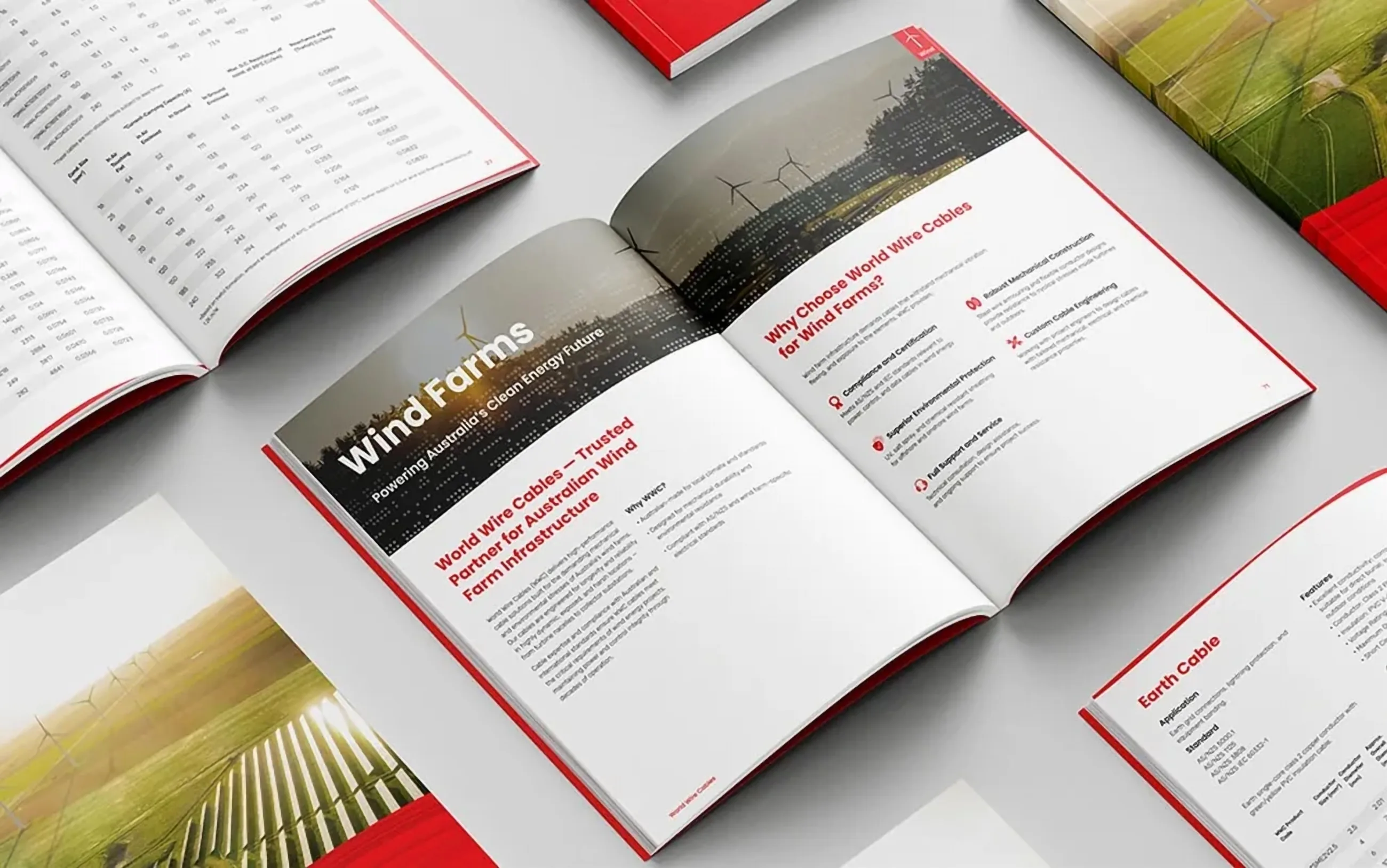
The pattern is easier to see in real work. World Wire Cables is a brand refresh focused on powering progress through clarity, with collateral, publication design and brand design involved. Clarity is a commercial issue when customers need to understand what makes a business the right fit. We do not need to invent results to learn from it: the combination of work involved shows that the visible execution has to connect back to a defined brand and forward to the moments where people make a decision.
For a related view, read our article on finding a sharper position. It explores the same issue from another part of the customer journey: how the work stays coherent while it changes shape.
Make the diagnosis practical. The goal is not to produce a grand theory of why growth slowed. It is to identify the clearest friction, agree on the decision that will remove it and put that decision into the materials and conversations customers experience. A focused change is easier to adopt and easier to learn from.
A relevant Bellman example from the work.
06Turn diagnosis into a focused reset.
A brand diagnosis will not replace a good sales plan, product or customer experience. It will make all of them easier to understand and easier to choose. That is often the most valuable place to start when growth has stalled.
If the current work feels disconnected, begin with a focused review rather than another isolated asset. A meeting with Bellman is a useful place to put the real question on the table and decide what should change, what should stay and what can work harder.
Choose a focused first move. It might be clarifying the website story, giving sales a sharper point of view, consolidating the core assets or repairing the touchpoints that matter most. A brand reset earns momentum when people can see the new decision in their daily work, rather than receiving a large document that never reaches the customer.

Questions we hear.
How do we know whether this is a brand problem or a channel problem?
Start by looking for the same friction across several touchpoints. If the message, presentation and customer explanation are unclear everywhere, the brand is part of the problem. If they are strong but one channel is underperforming, the issue may be more local.
Should the brand appear in every piece of work?
Yes, but not always as a large logo. Distinctive colour, type, voice, visual behaviour and a consistent point of view can make work recognisable before a logo is needed. The goal is fast recognition, not unnecessary branding clutter.
How much freedom should a campaign team have?
Enough to respond to the audience and the format, but within clear strategic and creative constants. A good system names what must remain recognisable and what can change. That is more productive than either total control or a blank brief.
What should we review first?
Begin with the customer journey that matters most: the first impression, the consideration moment and the point of action. Collect the real assets people see, not only the polished master files. The gaps usually become clear quickly.